

Tooth bleaching
Tooth bleaching
Tooth bleaching is one of the practical solutions in teeth whitening that are widely used today. Many people have beautiful teeth and discoloration of their teeth. Bleaching on their teeth changes the color of the teeth over time and with age. This bad tooth color is due to the penetration of pigments into the tubular structure of the enamel and the change of dentin minerals and causes yellow color in the teeth.
Many people do not have proper tooth color for congenital reasons. Since teeth whitening is subconsciously considered a sign of youth and beauty and has many effects on a person’s beauty, teeth whitening, also called bleaching in medical science, has always been popular. It should be noted that teeth bleaching can not be done on veneered teeth as well as dental implant veneers.
Types of bleaching:
There are generally two methods of bleaching that are done in the office or at home. Bleaching procedures should be prescribed by a physician and under the supervision of a cosmetologist and depends on the patient’s satisfaction. But in general, the best method is to prescribe both bleaching methods to increase the whiteness of the teeth and to satisfy the patient.

Essential tips in dental bleaching care:
- After teeth whitening, it is necessary to rinse and massage your gums with warm water in the first hours after treatment to reduce any possible inflammation by accelerating blood flow to the gums.
- Avoid prolonged contact of toothpaste foods with teeth for up to 48 hours after teeth bleaching.
- Maintaining treatment results depends on how much care you follow after whitening your teeth.
- Drinking a lot of coffee and strong tea, smoking, excessive use of colored products and not paying attention to oral health are some of the factors that cause your teeth to return to their original color in a shorter time.
- For up to a week after treatment and in the middle sessions of treatment, refrain from eating fresh lemon juice and apple juice and carry your toothbrush with you like a mobile phone and brush your teeth after every drink and food.
Office Bleaching:
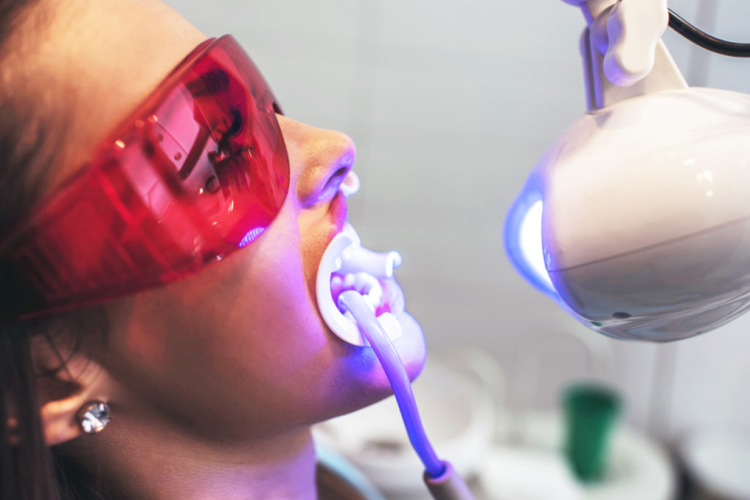
In this method, which is called whitening in the office, high-concentration bleaching gels are placed on the teeth for a short and specific time. In this method, the whitening speed of the upper teeth is a home method, but if it is not used properly, it may be. Causes transient allergies in the gums and oral mucosa. As a result, the dentist must have sufficient skills in teeth bleaching.
In this method, to prevent the contact of oxidants with the gums, special protective gels are used, which are skillfully placed on the gums and tightened with blue light.
In the market of dental equipment, there are other equipments and aids that fit into their structure in categories such as laser, plasma arc, LED, diodes, etc. Do not forget that in the end it is the bleaching gel that your teeth Whitens and the type of device has been effective in gel gelling !!!
Home bleaching:
In this method, the dentist molds your teeth to make a device called a “bleaching” for you. This device is in the shape of teeth and transparent. Bleaching agent should be placed inside the tear and in the areas related to each tooth and then the tear should be placed on the teeth.
Contrary to some dentists’ claims, bleaching results are not permanent and usually need to be repeated after several months.
The process of teeth whitening requires regular and correct use of bleaching agent. The whiteness of the teeth may not be noticeable in the first few days, so do not despair and move on.
Normally, most people need two weeks to whiten their teeth. However, in some people this may take longer depending on the cause of the tooth discoloration.
Bleaching agent can be injected in the form of syringes. After injecting the material into the tray, the piston should be pulled back slightly so that the material does not leak under pressure and is not wasted.
How long do teeth stay white after teeth bleaching?
It depends on the type of teeth, oral hygiene and diet. Less use of pigmented foods and beverages helps stabilize tooth color.
In general, the factors affecting the quality and durability of bleaching are:
1- The type of teeth
2- Observing personal hygiene
3- Type of diet
4- Materials used in the treatment of tooth bleaching
5- How to do the work by the dentist
Click for more information and to make an appointment with Dr. Jafari.


